Discover · noirlab.edu

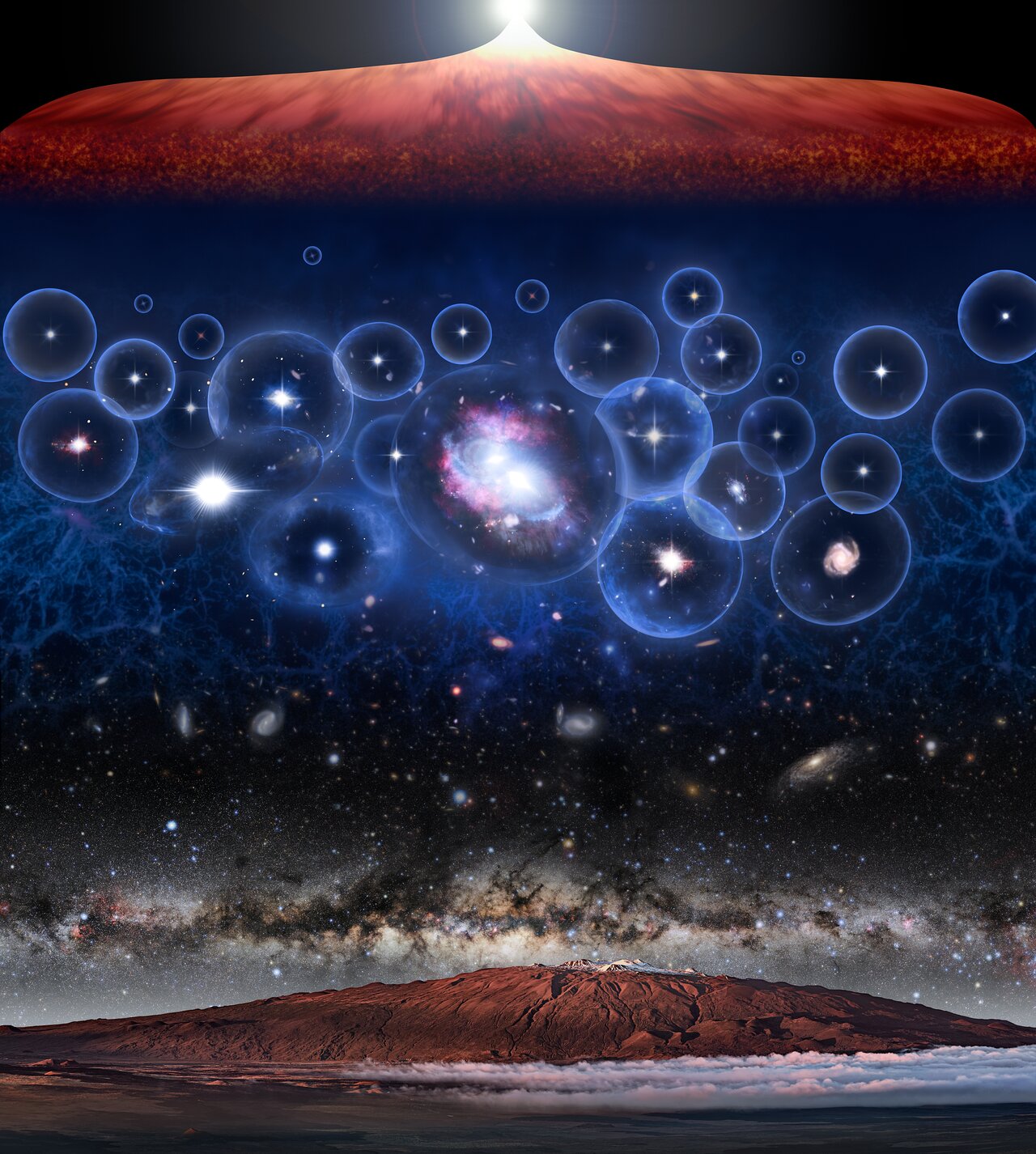
Science Release: Astronomers Discover Nāpōwawāʻenakaulua, the Oldest Compact Quasar Pair in the Universe

Boletín de Noticias de NOIRLab noirlab.edu

The oldest pair of compact quasars ever observed has been found only 900 million years after the Big Bang. Scientists say there is no theoretical explanation for how the pair of actively feeding black holes grew so massive at such an early time in the history of the Universe. The pair of quasars has been given the Hawaiian nickname Nāpōwawāʻenakaulua.

More ways to use this
Open on another device
Scan this QR code to open the same public page

Scan to open this page. Your saved notes and account access are not included.
Download QR code

Open the page link

Names and references

  1. Universe — person
  2. Science — person

Keep going

Each of these is read from what this estate already kept: the feed a piece came through, the publisher behind it, the credits and topics the publisher printed. None of it is a recommendation, an identity or a record kept anywhere else.

More like this

Also from Boletín de Noticias de NOIRLab

  1. Photo Release: NSF NOIRLab-operated Facilities Capture Brightening Nearby Supernovanoirlab.edu
  2. Science Release: NSF–DOE Vera C. Rubin Observatory Reveals Its First Dwarf Planet Candidate in Our Solar Systemnoirlab.edu
  3. Photo Release: Seagull Nebula Through the Eyes of NSF–DOE Vera C. Rubin Observatory Commissioning Cameranoirlab.edu
  4. Organization Release: NSF Kitt Peak National Observatory Welcomes Local Community to Tohono O’odham Nation Open Nightnoirlab.edu
  5. Photo Release: Gemini North Reveals Pearl-Like Knots in the Remnant of a Supernova Witnessed in the Year 1181noirlab.edu
  6. Science Release: Extremely Massive Galaxy Proto-Supercluster Smashes Distance Recordsnoirlab.edu