Cuttlefish on Mac: Running Android’s Virtual Device Framework Natively on Apple Silicon
Engineering at Meta fb.com
Aurekai listening
Listen to this summary
Original instrumental score; voice stays in front.
Ready to listen
This reads the text available on this page using your browser's voice. It is not a publisher-recorded narration; voice processing depends on your browser.Meta’s Reality Labs builds products such as AI glasses. Emulators provide us with a way to scale development and testing without relying on scarce physical hardware.
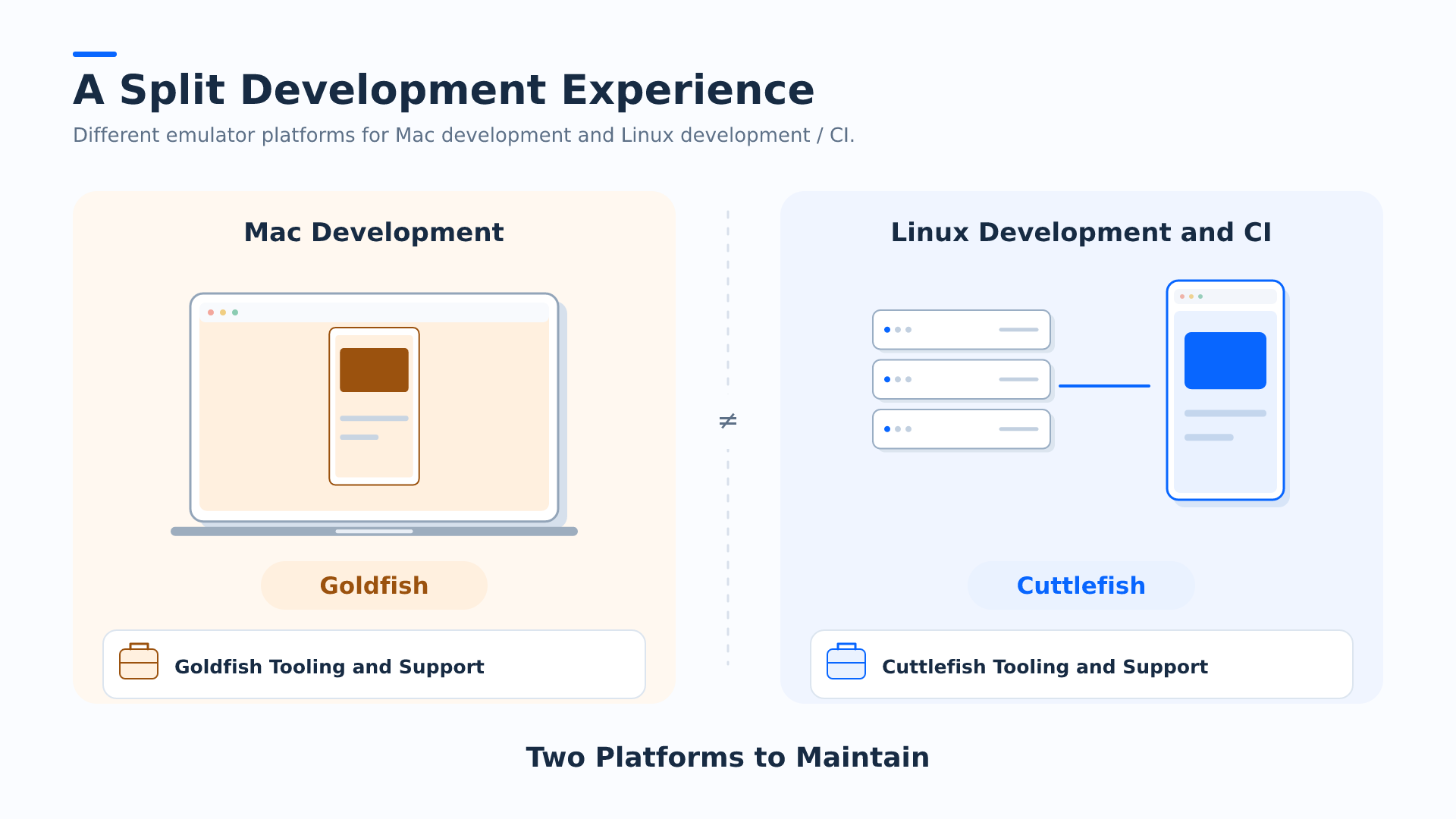
Testing software for non-phone Android devices depends on how closely a virtual device reproduces the software behavior of the physical product. While a lightweight emulator like Goldfish gets you part of the way, differences from the real device can hide bugs until later in development. This lack of fidelity also erodes trust in device emulation, increasing reliance on scarce physical hardware.
More ways to use this
Open on another device

Scan to open this page. Your saved notes and account access are not included.